
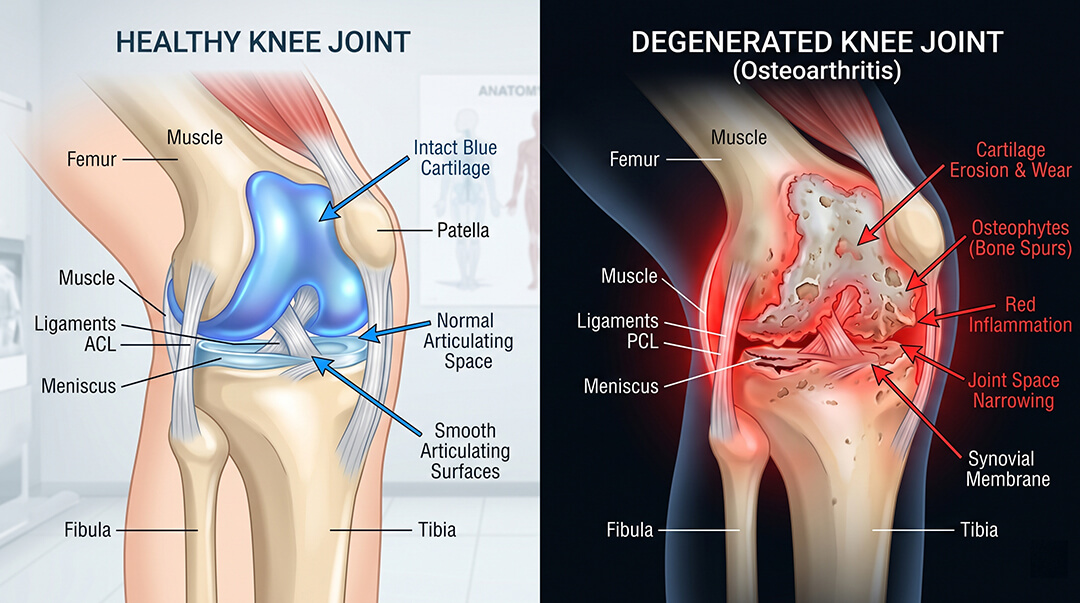
What Happens in Osteoarthritis?
For many people with knee pain or osteoarthritis, one common question comes up: “Can damaged cartilage actually be repaired?” The answer is not as simple as yes or no. But understanding how cartilage works—and how modern treatment approaches it—can help you make better decisions about your joint health.
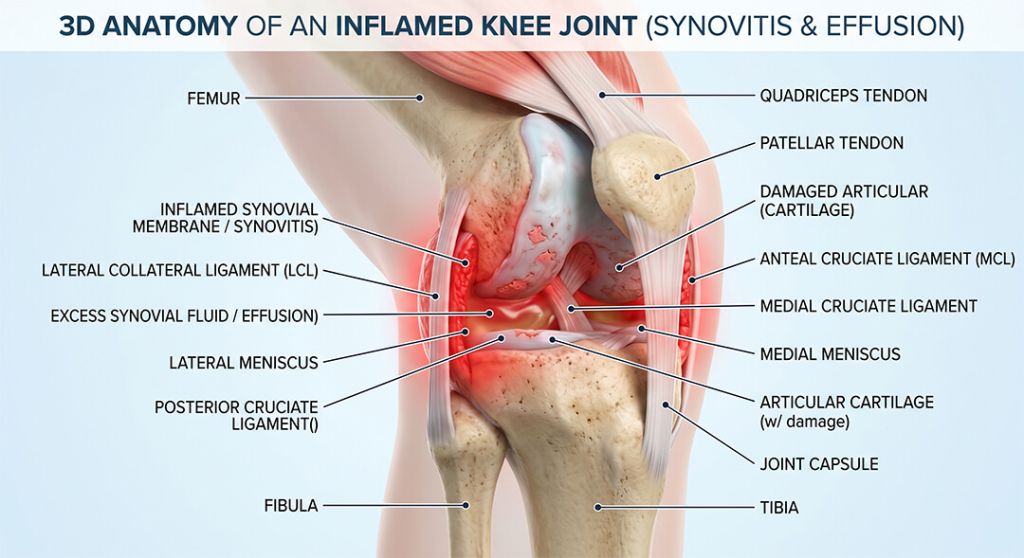
Osteoarthritis is not just “wear and tear”. It involves the breakdown of cartilage, reduced joint cushioning, inflammation inside the joint, and changes in surrounding tissues. Over time, this leads to pain, stiffness, and reduced mobility.
Can Cartilage Really Repair Itself?
Cartilage has very limited ability to heal on its own. This is because it has no direct blood supply, nutrients reach it slowly, and damage accumulates over time. That’s why many patients feel that their condition gradually worsens instead of improving.
Why Most Treatments Only Relieve Pain
Many conventional treatments focus on painkillers, anti-inflammatory medication, and temporary relief. While these may reduce discomfort, they do not address the cartilage condition, do not improve the joint environment, and do not slow progression effectively. This is why symptoms often return.
What Modern Osteoarthritis Treatment Focuses On
Today, the approach is different. Instead of only reducing pain, modern treatment aims to support cartilage health, improve the joint environment, reduce inflammation, and enhance mobility and function. The goal is not just relief—but better long-term joint condition.
How Rootheal Approaches Osteoarthritis
At Rootheal, we focus on treating osteoarthritis beyond just symptom control. Our approach includes:
Personalized Assessment
We assess severity, mobility, and underlying factors before planning treatment because every joint condition is different.
Targeted Non-Surgical Treatment
We focus on non-invasive approaches to reduce joint stress, improve movement, and support tissue recovery.
Improving Joint Environment
A healthier joint environment allows better function and slower degeneration.
Functional & Lifestyle Support
e guide patients on movement patterns, daily habits, and long-term joint protection.
"Our goal is not just to manage pain —but to improve how your joint functions over time."
When Should You Seek Treatment?
You should consider getting assessed if knee pain persists for weeks, stiffness affects daily movement, pain worsens with activity, or you feel reduced mobility. Early management can help slow progression and improve quality of life.
Final Thought:
Damaged cartilage does not easily "grow back" on its own. But with the right approach, it is possible to improve joint condition, reduce pain, and maintain mobility. The key is not to wait until the damage becomes severe.
If you are experiencing knee pain or joint issues, early assessment can make a difference.
